Enjoy the Great Outdoors!

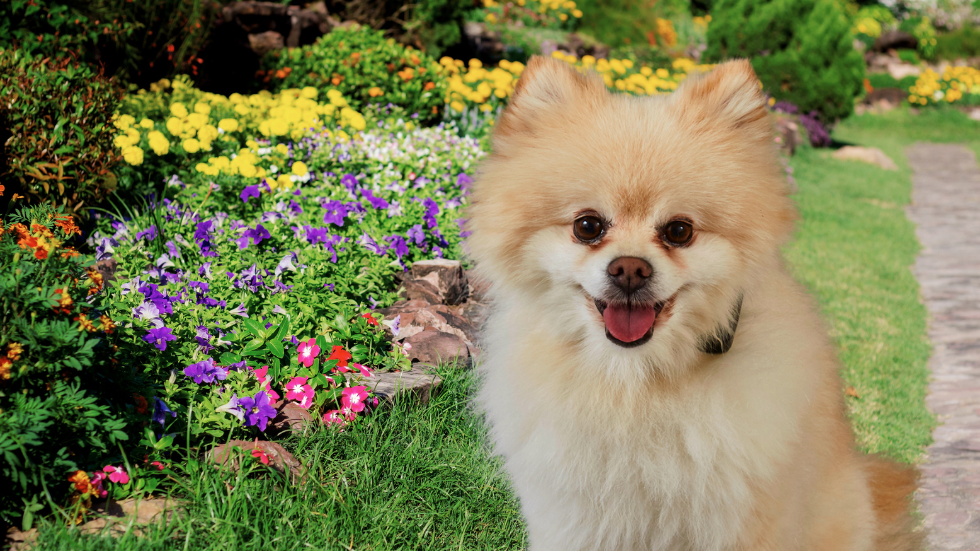
DogWatch Invisible Fence, hidden fenceFor those of you who are experiencing the change of seasons from the gray and white of winter to the verdant green of spring, you understand how good the transition feels. It’s a good bet that your pooch feels the same way.

Chances are you’re eyeing the flower bed and your garden patch and trying to remember where you last saw your good gardening gloves. The garden centers have stocked up on fertilizer, bags of mulch and those tempting little the seed packets that carry so much promise.

If your dog enjoys spending time outside, he may be happy to get his paws in there to ‘help’ with your gardening, but that might not work out so well for your garden . . .or for your dog. Your dog’s gardening penchant can be dangerous for him because many beautiful plants, and the fertilizers and mulches that we use to nurture a beautiful landscape, are toxic to dogs.

Iris, tulips, daffodils, and many other bulb plants are toxic, as are azaleas and foxglove. The ASPCA has an excellent list, with photos, of 448 of the most common toxic and non-toxic plants to help you plan your pet-safe garden.

As inviting and innocuous as they seem, lawns can also be a pet health hazard. Lawns that have been treated with nitrogen-rich fertilizers, herbicides, and pesticides are unhealthy for your pets, as are such things as slug and snail bait. Cocoa mulch, which is widely used in public parks, can be toxic to dogs, and should be avoided. Always walk your dog on a leash in public areas and avoid formal, manicured lawns that are likely to have been treated with a blend of chemicals.

Hidden FenceIf, despite your protective efforts, your dog does ingest a poisonous substance contact your vet right away or call the ASPCA’s 24-hour emergency poison hotline directly at 1-888-426-4435.

There is a solution to having the garden of your dreams and keeping your pet safe. A hidden underground fence is a great way to protect your dog while also protecting your garden. The underground fence is well-known for keeping your pet safely inside your yard, but the convenience of creating boundaries WITHIN a yard are often overlooked. You can designate flower beds, swimming pools, or any other area of your yard as out-of-bounds for your pet. You can customize your pet’s habitat to suit your lifestyle without depriving him of the joys and freedom of being outdoors.

Here are some examples of how hidden fence containment areas can be designed.

Why not take advantage of this beautiful weather, install a hidden dog fence this summer so both you and your pet can fully enjoy the great outdoors?

Tagged with: , ,
Posted in Dog Safety, Summer

There Are Tricks to Teaching Tricks

Clover in her “sitting pretty” pose. Image by www.dogwatchofcolumbus.com

We’ve all seen dogs on TV and YouTube who perform amazing and entertaining feats. They’re impressive and it looks like the dogs are having fun. Have you ever wished your pooch could learn to do some cool tricks?”  Well, teaching your four-legged friend a few simple stunts is not as hard as you might think, once you understand and make use of his or her natural tendencies.

Dogs are a lot like people in that they each have different talents, abilities, and propensities. They need to work on developing their abilities, just as people do. That’s where you come in. Simply by observing your pet you can discover what his natural abilities or tendencies are and what types of tricks your dog is most inclined to be able to do.

For instance, some dogs, especially Huskies, like to “talk back.” That is, when you speak to them, they seem to try to imitate what you are saying. If you have a dog that does this, you can easily teach him is to “talk.” Listen to what he already says. What does it sound like?  Whatever phrase or word he seems to be saying can become the name of his new trick. Reward the behavior, and encourage your dog to repeat the word or phrase time and time again. Soon enough,  your dog’s quirky, natural little trait will become a very cool new trick.

Yogi practices the “turkey pose.” Image by www.dogwatchofcolumbus.com.

Some dogs are especially adept at walking on their hind legs and seem to enjoy it.  These dogs are good candidates for learning “touchdown,” which is to stand on his hind legs with his front paws extended upward like the touchdown signal a referee makes in football. Or, If you have plenty of time to work with your pet, you can teach her to “dance.”

You can even turn the simple act of sitting into a trick, if your dog sits in an unusual way. This could include sitting upright on her rump, for instance, in the trick called “sit pretty.”  Or, if Fido lays with his legs sprawled out behind him, he could be taught to do this on command. This pose is sometimes called “turkey.”

If you keep an eye on your dog’s little idiosyncrasies,  you can often develop them into a trick that is more unique than the common tricks out there. No one needs to know that teaching them to your dog took so little time and energy. Work with your dog’s talents, and you both will have fun showing off.

Tagged with:
Posted in Dog Behaviors, Dog Training

Celebrate April!

Last week we celebrated National Pets Day (April 11), but if you happened to miss that piece of news, there are still a few more opportunities this month to spend time with and acknowledge that someone special in your life (your pet, of course!)

April 18 to April 27 is National Pet ID Week. If you haven’t microchipped your dog, this is a good time to reconsider. Most vets can insert the microchip that will assure you of being reunited with your pet should you ever be separated. For more information on this form of pet ID visit the ASPCA website.

On Monday, April 22, the world will celebrate the 43rd Earth Day. On this day, dedicated to the incredible living planet that we inhabit, people all over the world will step forward to perform “acts of green,” to learn about and protect our precious environment. Communities across the country will host clean-up days along roads, in the woods, around lakes, and along waterways. It’s a great outdoor activity to enjoy with your dog. Some people have even been known to let their dog contribute by carrying refuse in doggy saddlebags. Be sure to check with the event sponsor to make sure it’s a dog-safe and dog-friendly event. Take water and be sure to clean up after your dog.

April 26th marks National Kids and Pets Day, which reminds us of the special bond that is formed between children and their pets. It was started in 2005, by Colleen Paige, to celebrate that bond and to raise awareness of the plight of animals in shelters who are awaiting homes. “The responsibility that a child can learn from caring for a pet is vital in their social development,” says Ms. Paige “Children that grow up with pets tend to be extremely nurturing and compassionate, making dedicated and loving parents and pet owners themselves.” If your family is ready to care for a pet, consider adopting one from a shelter. If that’s not possible, volunteer with your child to visit animals in shelters to give them some special attention or take them for a walk.

World Veterinary Day is celebrated on April 27. Each year the World Veterinary Association and the Organization for Animal Health choose a theme for this day to focus worldwide awareness on a specific topic. This year’s theme is “Vaccination: To Prevent and Protect.” This is a good time to discuss a vaccination protocol with your veterinarian and to check to see if your dog’s vaccinations are up to date. Though rabies vaccinations are mandated in every state, that is not the only disease that your dog can be protected against. Veterinarians in some areas might recommend protecting against Lyme disease and recent outbreaks of distemper in Texas, Massachusetts, and Tennessee are a strong incentive to have your dog vaccinated against that deadly disease.

And it doesn’t stop there! If you live in the United Kingdom, the entire month of April is designated National Pet Month!  No matter where you are or what time of year, there is always a good reason to give your pet lots of love and attention  - no special pet day designation required .

Tagged with: , ,
Posted in New & Noteworthy, Pet Month

Your Perfect Exercise Buddy

Physical activity contributes substantially to our health. It helps us to control our weight, reduces our risk of cardiovascular disease, type 2 diabetes, and even some forms of cancer. It improves our mood, strengthens our bones, and increases our chances of living longer. We know it’s good for us, but we often need help sticking with an exercise regimen. Your pooch just might be the key to your exercise success.

A recent study by the University of Missouri-Columbia, found that owning a pet can encourage exercise and result in weight loss. In the yearlong study, participants walked dogs for 20 minutes a day 5 days a week. They lost an average of 14 pounds in 50 weeks. Some participants said that they continued, not for their own health, but because they knew it was good for the animal.

A Canadian study found that dog owners walked an average of 300 minutes a week, nearly twice the 168 minutes that non-dog owners walked. That study suggested that obligation toward the pet was a possible motivator.

Teaming up with your pooch can be as much fun as it is rewarding. Your dog’s energy and enthusiasm coupled with your sense of obligation towards his health and happiness can be a powerful motivator for your exercise routine. There are a great many physical activities that you can share with your dog.

A brisk daily walk with your dog is a great way to begin. Start with 15 minutes and slowly increase the time you walk together so that your both build up stamina and your dog’s paw pads have a chance to thicken. Vary the route, the terrain, and the pace. Add skipping, side-stepping, or walking backwards to add interest and keep both your heart rates up. Always carry water and a collapsable bowl, especially for longer outings. In hot weather test the surface temperature of asphalt, sand, or stone to be certain that your dog’s paws aren’t being burned. In snowy or icy conditions check his paws for ice build up.

Hiking is another excellent buddy experience for both you and your dog, offering new terrain, new sights, and a profusion of new scents. Again, remember to carry water for both of you, and if you hike in a area with ticks, see that both of you are protected and examined for ticks when you return home.

DogWatch’s Big Leash can enhance both walking and hiking with your dog. Once your dog is trained to respond to the collar you can give him freedom to explore. With the two-way communication Big Leash provides, you will know how far he is from you, and can remind him not too stray too far. If night falls, you can activate the collar LED from the controller so that you never lose sight of your canine exercise buddy.

Agility training can also be an opportunity for fun and exercise. As your dog runs through the course you can run alongside. Look for a course at the local dog park or doggie daycare center. You might even want to take part in some friendly agility competition.

There are many more ways to share physical activity with your pooch, such as jogging, swimming, playing fetch or frisbee. Remember to stay hydrated, stay safe, and, above all, have fun!

Tagged with: ,
Posted in Dog Healthcare, Dog Stories

Meet the Dogs of Dogwatch

Shiloh relaxing at the DogWatch office.

It might not be too surprising to learn that the DogWatch offices are populated by dog lovers and also by their loved dogs. To us it’s just natural to have a dog or two strolling the halls or sleeping comfortably under our desks. It comes as no surprise to learn that this once-rare workplace perk is becoming more popular.

According to an American Pet Products Association survey about 1.4 million owners take some 2.3 million dogs to work every day.Thousands of companies, such as Google and Amazon, are dog-friendly and on June 21 of this year, which marks the 15th anniversary of Pet Sitters International’s Take Your Dog to Work Day, thousands more businesses will participate by hosting our four-legged friends for the day or week.

Research has long shown that living with pets can help lower blood pressure and anxiety, as well as boost immunity. A recent study published in the International Journal of Workplace Health Management indicates that those positive benefits may translate to employees who work in pet-friendly workplaces.

Lucy, working at her DogWatch desk

The weeklong study involved 75 workers at Replacements Ltd. in Greensboro, North Carolina, a company that has allowed employees to bring their pets to work for 15 years. Stress levels were measured by self-reporting 4 times a day and by measuring the amount of cortisol, or stress hormone, present in samples of the employees saliva. By the end of each day the stress level of employees who took their pets to work were consistently lower than that of employees who didn’t bring their pets and of those who didn’t own pets.

Randolph Barker, business professor at Virginia Commonwealth University, who conducted the study says that, though the research is preliminary, “Pet presence may serve as a low-cost, wellness intervention readily available to many organizations and may enhance organizational satisfaction and perceptions of support.”

We don’t need any convincing. We love bringing our doggies to meetings about dogs. After all, happy dogs are what DogWatch is all about.

Pet Sitters International, creator of Take Your Dog to Work Day, offers 7 helpful tips on how to successfully integrate dogs into your workplace at: http://bit.ly/Zn9Zyw

Posted in Dog Stories, New & Noteworthy, Therapy Dogs

A Resounding Success! DogWatch Dealer’s Meeting, 2013

DogWatchThe weekend of February 12 was an exciting time for DogWatch dealers! Approximately 175 people traveled to Orlando, Florida to participate in the 18th Annual DogWatch Dealer meeting. Attendees included representatives from 80 Dealerships who traveled from throughout the United States, Canada as well as Great Britain, the Netherlands, Denmark and Australia. A notably large number of new Dealers were in attendance.

The meeting provided everyone with the opportunity to look back at a successful 2012 and provided a forum to discuss plans for the new business year.

It has been more than 20 years since our president, Fred King, established DogWatch. His vision included an innovative product that prioritizes pet safety coupled with a community focus of serving and supporting customers and their pets. After all of these years, the DogWatch mission remains the same, and its growth makes it possible for all of our dealers to offer the customer focused local service and support that Fred originally envisioned.

Our annual conference provides a wonderful opportunity for dealers to brush up on the latest technology and product development, spend time catching up with each other,  and share ways that they are managing their business in order to bring the best pet containment solutions to their communities.

Another  important aspect of the Annual Meeting is celebrating our top achievers with Dealer Awards. Congratulations to all of our award winners!

DEALERS OF THE YEAR

Major Market
Ty Kretzinger / DFW DogWatch
Emily & Patrick West / DogWatch of Columbus
Mid-Market
Gary Richardson / DogWatch of Nashville
Dave Spain / Triad DogWatch
Rookie of the Year2012 is 1st Full Year
Roy Dusenberry, DogWatch of Vermont
Top Dog Awards
1.   Ward & Samantha Chapman, DogFence UK
2.   Sue & Bruce Thompson, C No Pet Fence
3.   Shannon & Brent Potvin, DogWatch of Metro-Atlanta
4.   William Coden, Fido’s Fences
5.   Leddy Smith, DogWatch Systems
6.   Sue Marks & Mark Bridschge, DogWatch of Central CT
7.   Shawn Bader, DogWatch by Petworks
8.   Emily & Pat West, DogWatach of Columbus
9.   Liz & Jack Goetz, DogWatch of Greater Pittsburgh
10. Curt Little, DogWatch of Central Indiana
Sales Achievement Awards
50+% Growth

Cal Noehring, DogWatch of Greater Toronto Area (GTA)
Dee & Tim Smith, DogWatch of Sarasota
Jamie Young, Palmetto DogWatch
Eddie Poynter, North Harbor Hidden Fences (NZ)
Laurie & Mark Spain, Stateline DogWatch
Lisa Schultz, DogWatch of Cleveland
Jay Fleck, DogWatch of Green County
40-50% Growth
Ty Kretzinger, DFW DogWatch
Buck Horton, DogWatch of Central Alabama
Dave Benfield, DogWatch of Central Florida
Dave Spain, Triad DogWatch
Dave Acree, DogWatch by Acree Landscaping
30-40% Growth
Garth Sweetman, South Island Hidden Fence (NZ)
Tony Lawrence, DogWatch of Alaska
John Townsend, DogWatch of Chillicothe
Teresa & Dave Billone, DogWatch by Billone Fence
Maryann Bean, DogWatch of the Endless Mountains
Gary Richardson, DogWatch of Nashville
Linda Smyth, DogWatch of Eastern Connecticut
20-30% Growth
Mary Jo Mentink, DogWatch of Northern Kentucky
Emily & Pat West, DogWatch of Columbus
Shane Brzezinski, DogWatch of Central Wisconsin
Jamie Young, Palmetto DogWatch
Pete Harvey, DogWatch of Southeast Wisconsin
Gary Glaser, DogWatch of Greater Baltimore
Paul Carey, DogWatch of Southeast Michigan
Tom Schmidt, DogWatch of Southwest Georgia
Julie & Wade McCormick, DogWatch of Utah
Alan Grammar, MetroEast DogWatch
Jim Van Zant, DogWatch of Northeast Ohio
Brad Wolfe, DogWatch of Southeast Ontario
15-20% Growth
Jenny & George Richardson, DogWatch of Southeast VA
Drew Knutzen, DogWatch of Colorado
Beth and Travis Canty, DogWatch of the Triangle
Marth & Dave Roddenberry, DogWatch of Central GA

Thank you to all of our dealers for another wonderful year of serving our communities with the best pet containment solutions and superior community support for our customers!

Tagged with: ,
Posted in DogWatch Dealer Chat, New & Noteworthy

Your Pet’s Pearly Whites

Every tooth in a man’s head is more valuable than a diamond.”

~Miguel de Cervantes, 1605

DogWatch, A healthy adult dog has 42 teeth, 10 more than we do. It shouldn’t come as a surprise to learn that every one of his 42 teeth is as important to his overall health as ours are to us.

In an effort to educate pet owners about the need to provide their pets with good dental hygiene the American Veterinary Medical Association (AVMA) has designated February National Pet Dental Health Month.

Because of the types of bacteria that reside in a dog’s mouth, coupled with what is usually a diet low in simple sugars, only about 5% of dogs ever develop cavities, but that doesn’t mean they don’t need dental care. Like humans, dogs are susceptible to periodontal disease, and like humans, that can lead to painful swelling of the gums, tooth loss, and even infections that are life-threatening.

“Good pet owners are concerned about their pets’ health and are careful to keep their vaccinations up to date, but may forget about the importance of oral health. Great owners know that this is a big mistake, as periodontal disease is the most common health problem that veterinarians find in pets,” explains Dr. Douglas Aspros, president of the AVMA.

So, what does Fido need in the way of oral hygiene? The Pets Need Dental Health Care, Too campaign advocates a 3-step program.

  • Take your pet to the veterinarian for a dental exam
  • Begin a dental care regimen at home
  • Schedule regular veterinary checkups

Dog Tooth Brushing 101: Watch this  video to find out how to brush your pet’s teeth. of oral hygiene for your dog. You’ll be rewarded every time your dog flashes his pearly whites.

At DogWatch, we care about every aspect of your dog’s health!


Tagged with: , ,
Posted in Dog Grooming, Dog Healthcare, Uncategorized

It Only Seems Like Magic!

Much of what makes our modern technology work is invisible. Our cell phones, televisions, and computers receive images and sounds through the air. GPS talks to satellites and tells us where we are, and our printers whir into motion, no strings attached. The invisibility of the workings of technology makes it all a little mysterious; some people even find it scary; our ancestors would have called it “magic.”

Electric fence, invisible fence, hidden dog fence, underground dog fence—What images do these terms conjure up in your mind and in the minds of other dog owners who are considering installing an electronic pet containment system? There are many misconceptions about hidden fences. Some people envision a live electric wire under an inch or two of soil running around the perimeter of their property, others imagine a kind of invisible force field surrounding their border. Many people assume that electronic fences keep pets in their yards by “punishing” them with an electric shock if they try to leave the yard.

Don’t let misconceptions keep you and your pet from enjoying the freedom and security of a Hidden Fence. Let us clear some things up.  We call DogWatch’s outdoor pet containment system a “hidden fence” because it acts like a fence, keeping your pet inside a designated area, but there are no visible impediments. How does it accomplish this?

The Technology

Though electricity is essential to power the Hidden Fence system, the wire that creates the hidden fence does NOT carry an electrical charge. There is no danger of being shocked when crossing it and no danger if the wire gets wet; you can hold the wire in your hand and you won’t feel a thing. The buried wire is an antenna that transmits a radio signal from a transmitter that’s installed somewhere in your house or garage.  Your pet wears a “radio receiver” on its collar that picks up that radio signal.

When the radio signal is picked up by the battery-operated “receiver” attached to your pet’s collar, it triggers a warning tone that, once trained, your dog recognizes. If the dog moves away from the underground wire, the receiver no longer receives the radio signal and the tone is silenced. If, however, the dog continues to move closer to the underground wire, he will receive a static shock, much like the static shock you receive when you walk across a nylon carpet and then reach for a metal doorknob—not drop-to-your-knees painful, but unpleasant enough to be avoided.

With the DogWatch system, the correction that the dog receives can be adjusted in strength and in the distance the signal transmits from the boundary wire. These and other adjustments allow the system to be set to the temperament of the pet – for those who need only a gentle reminder to those for whom escape is a never-ending challenge game.

Click here to learn more about hidden fence technology. 

Teaching Your Pet

Technology is an essential part of the effectiveness of an electronic fence, but it is not the only component. Your dog doesn’t automatically sense where the boundary is, nor that he needs to stay within that boundary, until you teach him.

A Hidden Fence is NOT a punishment system. It’s a training tool. You teach your pet to understand the containment area through voice commands, audible warning signals from the receiver collar, and visual flags that are set inside the boundary. He goes through a training session with you for a few minutes each day for 7 to 10 days. With training, the dog remembers the placement of the flags and associates the flags with the audible signal from the collar. He learns that if he goes beyond the flags he will receive an unpleasant static shock. Most dogs (and cats) are pretty smart and learn to avoid this by staying within the flags and by moving away when they hear the warning signal.

As the dog learns to stay within the boundary area, the flags are slowly taken away.  At this point, most dogs know where the boundary is even without the visual cue, and if they forget, the audible warning signal from the collar is a gentle reminder not to go any further. That is usually all it takes for most dogs. Knowing where the boundary is allows your pet to play freely and safely in his own yard. And that makes for a very happy dog.

No, the Hidden Fence is not magic, but it will seem like magic to see your pet enjoying the outdoors while you are confident that he will remain in the safe environment that the Hidden Fence has created.

Learn

Tagged with: , , , ,
Posted in Dog Training, Products

Answering the Big Questions about Underground Dog Fences

Seeing a happy, healthy dog playing in his own yard without a tether and without constant supervision is a joy to a dog lover, and frequently leads to a friendly chat with that well-behaved dog’s owner. More often than not, the impressed observer learns that there is an underground pet fence installed around the yard’s perimeter and the dog has been trained to respect that boundary.

After seeing the freedom and safety provided by such a fence, there are often questions about buying and installing an “invisible” or hidden fence. The answer is that there are several underground pet fence options with various features, price ranges and quality. Some are Dealer-installed while others are designed for self-installation, and it is good to do some homework before making a decision.

If you are thinking of purchasing a pet fence system, we hope you will consider DogWatch! Here are some reasons why DogWatch is a smart choice and some important things you need to consider when evaluating the options.

An underground fence is a training tool that must be introduced correctly to be consistently effective. Proper introductory training of your dog assures that he is not confused or frightened by the system and that he recognizes and respects the boundaries. DogWatch is a professionally installed system that includes training for both the dog and the dog’s people plus follow-up after the system is installed to ensure the fence is working and the dog is safe and happy. Self-installed dog fence systems may provide an instruction guide but do not include on-site training or follow-up.

Consider the life of the product and the equipment warranty when making your decision. All the reputable companies offer some kind of warranty, but not all the warranties are the same and some are available only for additional cost. DogWatch outdoor systems include a lifetime warranty as a standard feature. It even covers damage if your adorable pooch chews on the receiver. With DogWatch, if you move and take the system with you, the warranty for your system continues to be valid. Read the warranty carefully and ask questions for each of the systems you are considering.

  • Battery cost and life vary greatly. A system that requires a proprietary battery, frequent replacement or one that must be replaced by a Dealer will add significantly to your costs. Rechargeable batteries are less reliable than standard batteries, require removing the receiver collar frequently for recharging and are expensive to replace. Batteries for the DogWatch system have longer battery life than all other systems and can be changed by the user. See a comparison of batteries and of their ongoing costs here.
  • Adjustments to the system that must be done by a Dealer are inconvenient and add to your overall cost. You should be able to do something as simple as changing the level of correction that your pet receives. A system that is adjustable by the user means no waiting for a service person and no service charge. DogWatch equipment is owner-adjustable and support is available by phone and “how to” videos on the DogWatch website. For Dealer installed systems, be sure to ask what is user-adjustable and what requires Dealer adjustment. Also know what kind of support is available if you have questions or need assistance, especially if you are considering a self-installed underground dog fence.
  • Consider the usefulness and value of the features of each system. Does the system alert you to a low battery? How’s your dog doing? Will you know if he has he tested the boundary lately? Does the system include lightening protection or is that an add-on? Will your pet be confused by unintended corrections when your neighbor uses their garage door opener or can you be certain that he will receive a correction only if he tests the boundary? See how the DogWatch system compares to Invisible Fence,® (another leading pet containment brand).
  • In addition to choosing the system that is best for your pet, by choosing DogWatch, you are also choosing the system that is best for your community. DogWatch products are lead-free and compliant with the Reduction of Hazardous Substances initiative (RoHS). They are safe for your pet and safe for landfills. And our Dealer network is 100% locally owned, so that the investment you make stays in your community.

DogWatch Hidden Fences are sold and installed only by local DogWatch Dealers who own their own businesses – no franchises or regional distribution networks. A happy customer is their best advertising, so DogWatch Dealers have a strong incentive to make sure the installation and training are done correctly and that their Customer Service is second to none.

Imagine opening your door to let your dog out, confident that he won’t roam or be in danger from traffic. Gone are the days when a dog needs to be accompanied or tethered whenever he’s outdoors. Gone are the days of worrying about open gates or fences that you dog can chew through, dig under or jump over. By installing an underground dog fence you give him freedom and safety while giving yourself peace of mind. When you take the next step and choose a hidden fence system, we hope it will be DogWatch, the most advanced and most customer-focused system on the market.

Posted in Dog Collars, Products

DogWatch’s Plan for a Trouble-Free Holiday

Raleigh in a Santa hat in front of the tree.What a beautiful time of year! The holidays mean guests, food, and gifts. The house gets spruced up, friends come over for snacks and cocktails, and extended family join us for dinner and gift exchange.

Our pets sense the excitement in the air, they smell the food, and are curious about the indoor tree and everything that is on and under it. Is it any wonder that they sometimes misbehave during this season?

An excited, ‘enthusiastic’ dog can send china and holiday decorations crashing to the floor. An indoor tree may seem a lot like an outdoor tree to a dog when his usual routine is disrupted. And who hasn’t heard the stories about dogs being injured by eating presents, gift wrapping and goodies, or being shocked while chewing on light strings?

Here are a few tips to help keep your pet safe and your home in one un-chewed piece during this season’s festivities.

▪       Maintain your pet’s eating and exercise routine. If your dog is used to an afternoon walk, find time to take her, or enlist a visiting dog lover to give her that needed outdoor time. Cesar Millan recommends that you give your dog extra exercise to tire her out before the guests arrive — a good preventative measure.

▪       People food given to a pet can give them the idea that they are welcome to help themselves to the same food when it’s on the kitchen counter or dinner table. Discourage your guests from feeding the dog, or if they can’t resist, provide them with some of the dog’s usual treats.

▪         Never leave a dog (or any pet), alone in a room with a burning candle or other open flame.

▪         Lay wires against baseboards or snug against walls where possible and/or run them through a protective sleeve. Bundle excess wires and tuck them out of sight.

▪       Make sure your pets have a quiet place to retreat if the confusion of a gathering makes them anxious. If you know that your pet is prone to anxiety around people, consider investing in a Thunder Shirt or asking your veterinarian about medications to help your pet stay calm.

▪       Keep presents, ornaments, and other decorations out of reach, or establish a boundary around those tempting objects. Scroll down to see DogWatch® Hidden Fences’ lineup of indoor boundary systems.

▪       Hang tinsel high and make sure it is out of reach, or avoid it altogether.

▪       Make sure pets cannot access the water in the Christmas tree stand. The stagnant water may contain harmful bacteria, fertilizer or toxic additives to help preserve the tree.

▪       Keep your pets away from pine needles, as they can be responsible for punctured intestines.

▪       Choose ribbon or yarn to hang ornaments instead of metal ornament hooks.

DogWatch Hidden Fences’ indoor hidden pet boundaries make it easy to unobtrusively keep any area of your home pet-free. Simply place the battery-operated wireless IB-100 transmitter Dog playing with some wrapping paper. under your tree to create an 8-foot diameter zone that protects the tree and all that’s on and under it from pet incursion, and assures that your pet won’t disrupt (or eat!) decorations and gifts that could be dangerous to him.

Expand your boundary with the IB-200 transmitter, which can be used with or without a boundary wire. Without a wire, it will protect an area 10 feet in diameter; used with a wire, larger specific boundaries can be defined.

Scoot!® is an extra small transmitter that is used with a boundary wire that is easily hidden along the edge of a cabinet or around a piece of furniture.

Eliminate worries about your pets this holiday season. Contact your local DogWatch Dealer to learn more about how our hidden dog and cat fences can create pet containment zones both inside and outside your home.


Photo credits
Top: K P via Flickr
Bottom: David J Laporte via Flickr


Posted in Holidays, Seasonal, Winter